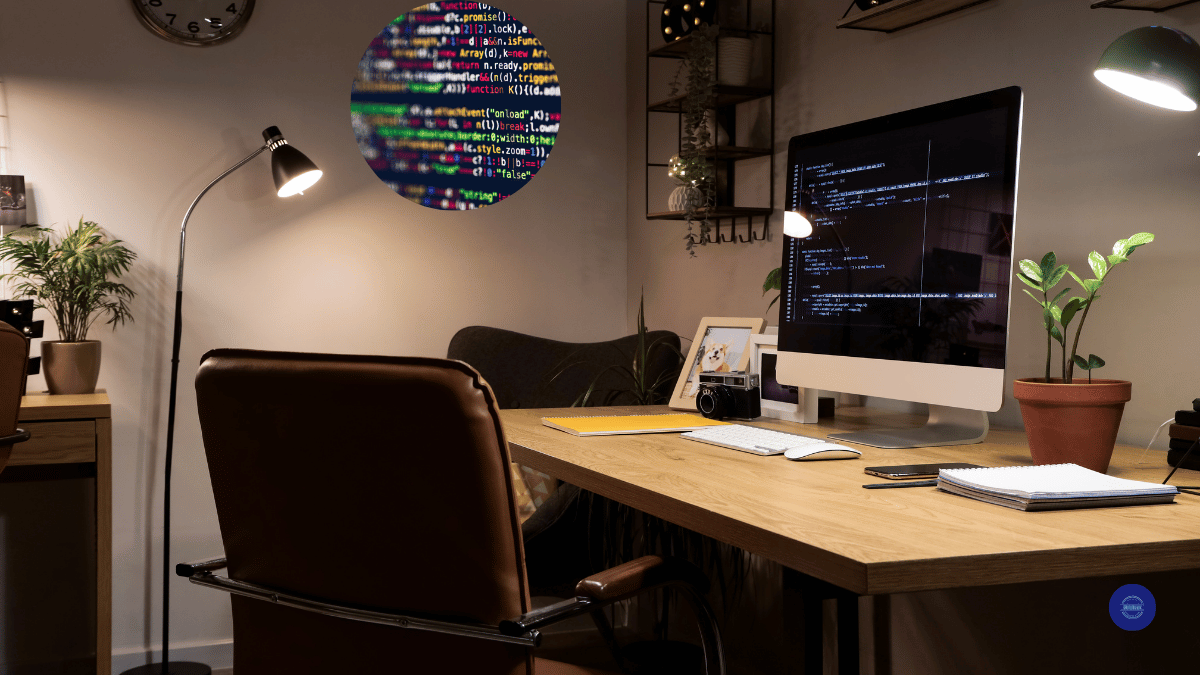
After getting more or less comfortable with HTML and CSS, JavaScript felt like the natural next step.
That was the narrative everywhere or so I thought:
structure first, styling next, logic after.
So I stepped into JavaScript expecting momentum. I assumed the confidence I had built would carry me forward. It felt like a good time to go a step forward.
Instead, I hit a wall.
Things stopped behaving predictably. Many things seemed to change. I needed to recalibrate. With HTML and CSS, my practice lived almost entirely inside VS Code. JavaScript broke that comfort. Suddenly, I had to explore the wider world of the browser—its console, its layers, and how every small change ripples through a page.
A small mistake could cause a big problem.
A missing character could break everything.
And the feedback I received — error messages — felt less helpful and more overwhelming.
With HTML and CSS, I could usually see what was wrong.
With JavaScript, things failed quietly or loudly, but rarely clearly.
The page didn’t just look wrong.
It stopped working altogether.
At first, I thought the problem was JavaScript.
It felt unforgiving.
Too abstract.
Too sensitive.
But looking back now, I can see that the real issue wasn’t the language.
It was my expectation.
I assumed that because I have become conversant with structure and styling, logic would come easily.
I thought progression was linear:
HTML → CSS → JavaScript.
I was wrong. JavaScript didn’t build on confidence the same way CSS did.
It demanded something different.
JavaScript exposed gaps I hadn’t realized were there.
It forced me to confront:
- how logic actually flows,
- how conditions affect outcomes,
- how code thinks step by step,
- how decisions are made before results appear.
This wasn’t about syntax alone.
It was about thinking in sequence, not just arrangement.
And that kind of thinking hadn’t been fully formed yet.
What made this phase difficult wasn’t failure.
It was uncertainty.
I could no longer rely on visual feedback alone. I had to trust invisible processes. I had to understand what was happening before something appeared — or didn’t.
That shift was uncomfortable.
But it was also revealing.
JavaScript didn’t block me because I wasn’t capable.
It slowed me down because I needed a different foundation.
What felt like resistance was actually information.
Feedback.
That moment forced me to pause.
Not to quit — but to rethink how I was learning.
I began to question the assumption that there was only one correct order. I started to wonder whether understanding logic required a different entry point.
JavaScript didn’t fail me.
It showed me what I was missing.
And that realization changed the direction of the journey that followed.
This post is part of my ongoing learning archive.
→ My Tech Learning Journey — One Step at a Time
 Obi'sDeck